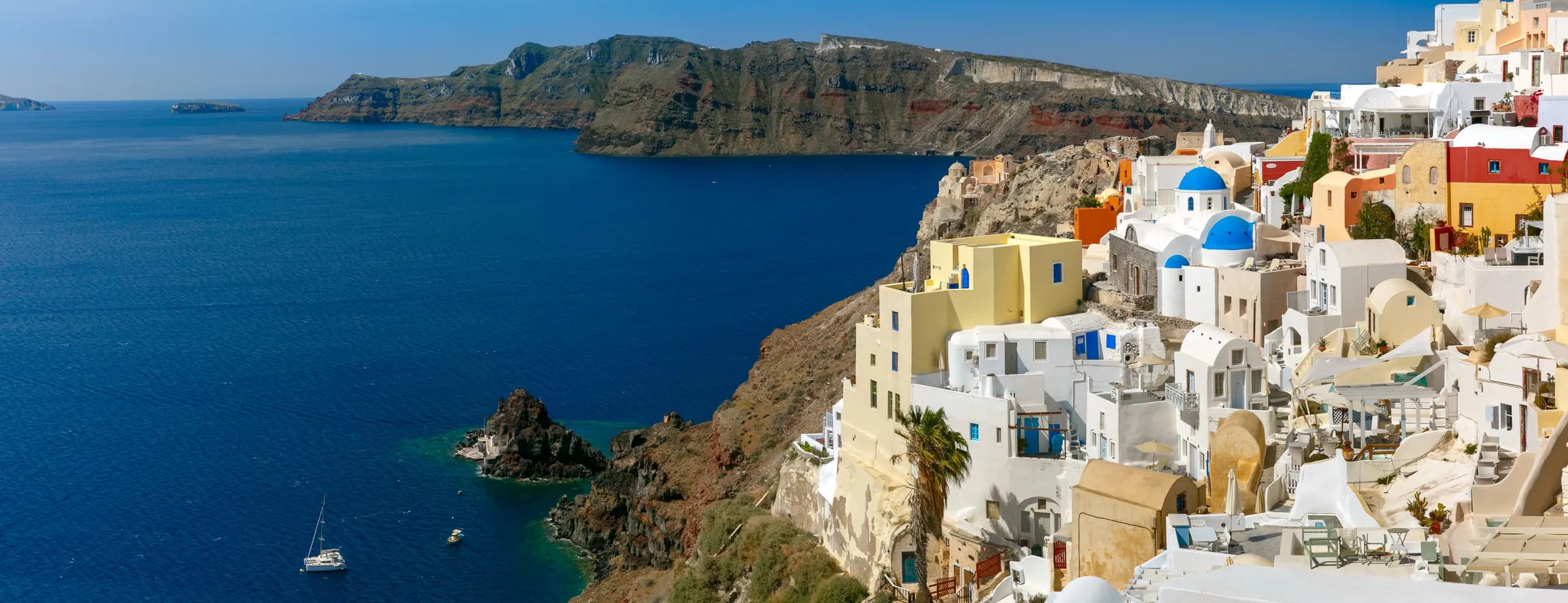
Greece Travel Guide
The Acropolis, whitewashed island villages and the clearest blue water in Europe.
Updated October 2026
Why visit Greece
Greece is two holidays in one. On the mainland you'll find the Acropolis and ancient sites like Delphi and Olympia; out at sea there are more than two hundred inhabited islands, from the famous sunsets of Santorini and the beach clubs of Mykonos to quieter favourites like Naxos, Milos and Paros.
Most trips start in Athens and continue by ferry or a short flight to one or more islands. Crete, the largest, has enough beaches, gorges and Minoan palaces for a whole week. This guide covers when to go, how island-hopping works and how to keep your phone online between ports.
Internet & eSIM
Staying connected in Greece
Island-hopping runs on your phone: ferry tickets and live departure updates, maps of winding village lanes, and messages with your host about arrival times. Café and hotel Wi-Fi is everywhere on the islands, but you'll want data on the ferry, at the beach and while driving between villages.
If your plan is from outside the EU, roaming in Greece can be costly. A Viberest eSIM gives you local data from the moment you land: install it at home with a QR code, switch it on at the airport and keep your own SIM for calls and texts. Coverage is good across the mainland and the popular islands.
- Install before departure, turn on when you land
- Keep your own number active for WhatsApp and SMS codes
- Check ferry times and maps between islands

Viberest eSIM
Stay connected in Greece

Flights to Greece
Compare prices from hundreds of airlines and travel sites.
Tours & activities
Top things to do in Greece
 Tours
ToursAcropolis and Parthenon Guided Walking Tour
Athens, Greece
2 hours
2 hoursFree cancellation
from $39
 Tours
ToursAthens: Acropolis, Parthenon and Acropolis Museum Guided Tour
Athens, Greece
2 hours
2 hoursFree cancellation
from $39
 Tours
ToursBest of Athens Half Day Private Tour
Athens, Greece
4 hours
4 hoursFree cancellation
from $48
 Tours
ToursAthens All Included: Acropolis and Museum Guided Tour with Ticket
Athens, Greece
3 hours
3 hoursFree cancellation
from $157
 Tours
ToursSantorini Classic Catamaran Cruise with BBQ, Drinks and Transfers
Santorini, Greece
5 hours
5 hoursFree cancellation
from $91
 Tours
ToursPrivate Tailor-Made Santorini Land Tour with a Local Driver
Santorini, Greece
3 hours
3 hoursFree cancellation
from $55
 Tours
ToursHalf-Day Exclusive Catamaran Cruise in Santorini with Meal and Open Bar
Santorini, Greece
5 hours
5 hoursFree cancellation
from $123
 Tours
ToursAll Day Cruise -3 Islands to Agistri,Moni, Aegina with lunch and drinks included
Athens, Greece
10 hours
10 hoursFree cancellation
from $153
Bookings are made with our partner Viator. Viberest may earn a commission when you book through these links, at no extra cost to you.
Where to go
Popular cities in Greece
- AthensThe Acropolis, the Plaka and rooftop bars with Parthenon views.Things to do in Athens
- SantoriniCaldera sunsets in Oia, volcanic beaches and wine tastings.Things to do in Santorini
- MykonosWindmills, Little Venice and the liveliest beaches in the Aegean.Things to do in Mykonos
- CreteKnossos, the Samaria Gorge and the pink sand of Elafonissi.Things to do in Crete
- ThessalonikiByzantine churches, a waterfront promenade and great street food.Things to do in Thessaloniki
- RhodesA medieval walled old town and Lindos above the sea.Things to do in Rhodes
Seasons
Best time to visit Greece
May–June and September–early October are the best months: warm sea, open islands and fewer crowds than July and August.
- Jan — fair
- Feb — fair
- Mar — fair
- Apr — good
- May — great
- Jun — great
- Jul — good
- Aug — good
- Sep — great
- Oct — great
- Nov — fair
- Dec — fair
BestGoodLess ideal
Spring · Mar–May
Wildflowers, green hills and comfortable temperatures for ancient sites. Many island hotels open from April, and the sea warms up by late May.
Summer · Jun–Aug
Peak season: hot, sunny and lively, with the strong meltemi wind in the Aegean. Book ferries and rooms well ahead for July and August.
Autumn · Sep–Nov
The sea is at its warmest in September and crowds thin out. From late October many smaller island businesses close for winter.
Winter · Dec–Feb
Quiet and mild in Athens — great for museums and archaeological sites without queues. Most islands are sleepy, with limited ferries.
Before you go
Greece travel tips
Plan ferries ahead
Ferry schedules change by season and popular routes sell out in summer. Book key legs in advance and allow a buffer day before your flight home.
Start early at ancient sites
Visit the Acropolis and other sites at opening time to beat the heat and the tour groups. Many have timed tickets in high season.
Carry some cash
Cards work in most places, but small tavernas, kiosks and beach bars on the islands may prefer cash.
Respect the dress code
Monasteries and churches ask for covered shoulders and knees — carry a light layer.
Plugs and power
Greece uses type C and F sockets at 230 V. Visitors from the UK, US and many other countries need an adapter.
Entry requirements
Greece is part of the Schengen Area. The EU is introducing new digital border checks (EES and ETIAS) for non-EU visitors — check what applies to your passport before you travel.
EU travel informationGreece packing checklist
0/7FAQ
Greece travel questions
How do I get around the Greek islands?
Ferries connect most islands with Athens' ports (Piraeus, Rafina and Lavrio) and with each other; fast boats are quicker but pricier. Larger islands like Santorini, Mykonos, Crete and Rhodes also have flights.
Will my phone have data in Greece?
Yes, if your plan includes roaming or you add a travel eSIM. Most recent iPhones, Google Pixel and Samsung Galaxy phones support eSIM, as long as they're carrier-unlocked.
Which mobile networks does the Viberest Greece eSIM use?
Our Greece plans connect through Wind and Vodafone, with 5G where available — the same networks local residents use.
When is the best time to visit Greece?
May, June, September and early October offer warm weather and a swimmable sea without peak crowds. July and August are hottest and busiest.
Which Greek island should I visit first?
Santorini for views, Mykonos for nightlife, Crete for variety, and Naxos or Paros for a relaxed, good-value mix. Many travellers combine two or three islands on one ferry route.
Is tipping expected in Greece?
It's appreciated but not mandatory. Leaving around 5–10% in restaurants or rounding up taxi fares is common.
 Viberest eSIM
Stay online in Greece
- Maps, translation & messaging — no roaming fees
- Install by QR in minutes, keep your own number
- Delivered to your email right after checkout
Keep exploring