Japan Travel Guide
Neon cities, quiet temples and Mt. Fuji — all connected by the world's best trains.
Updated October 2026
Why visit Japan
Japan rewards every kind of traveller. In a single week you can cross Tokyo's busiest crossing in Shibuya, sleep in a ryokan with a hot-spring bath, walk through thousands of red torii gates in Kyoto and eat your way through Osaka's street-food stalls. Fast, punctual trains link it all, so even a first trip can cover a lot of ground.
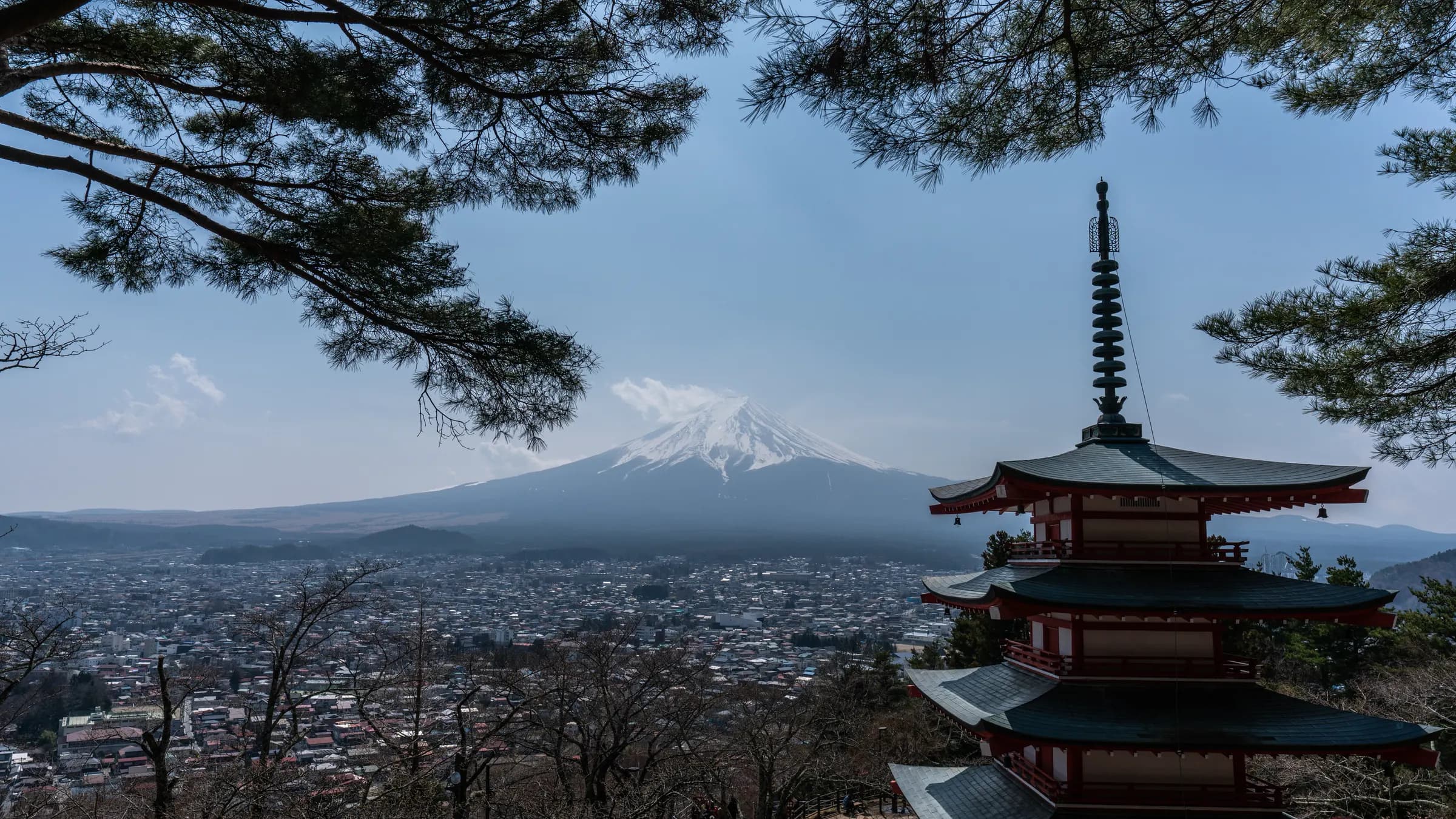
Most visitors start in Tokyo, continue to Kyoto and Osaka on the shinkansen bullet train, and add a day trip to Hakone or Nara. Come back and there is still Hokkaido's powder snow, Hiroshima's peace memorial and the beaches of Okinawa. This guide covers what you need to plan it well — including how to stay online from the moment you land.
Internet & eSIM
Staying connected in Japan
You will use your phone constantly in Japan: for train routes in Google Maps, for translating menus with your camera, and for booking restaurants and tickets. Free public Wi-Fi exists in stations, airports and convenience stores, but it often needs a sign-up and drops as soon as you walk away — not something to rely on when you're trying to find your platform.
An eSIM is the simplest way to have mobile data from the moment your plane lands. You install it before you fly by scanning a QR code, then switch it on after landing — no counter to find, no pocket Wi-Fi router to collect and return, and your own SIM stays in the phone for calls and texts from home. Your phone needs to support eSIM and be carrier-unlocked.
- Install before departure, turn on when you land
- Keep your own number active for WhatsApp and SMS codes
- Data-only plans — call and message through apps like WhatsApp or LINE

Viberest eSIM
Stay connected in Japan

Flights to Japan
Compare prices from hundreds of airlines and travel sites.
Tours & activities
Top things to do in Japan
 Tours
ToursMt Fuji and Hakone 1-Day Bus Tour Return by Bullet Train
Tokyo, Japan
11 hours
11 hoursFree cancellation
from $159
 Tours
ToursPrivate Tour to Mt. Fuji/or hakone (Fully Licensed Operator)
Tokyo, Japan
10 hours
10 hoursFree cancellation
from $507
 Tours
ToursMount Fuji Full Day Sightseeing Tour from Tokyo
Tokyo, Japan
10 hours
10 hoursFree cancellation
from $54
 Tours
ToursTokyo Shinjuku Sumo Show & Experience with Photo
Tokyo, Japan
1.5 hours
1.5 hoursFree cancellation
from $78
 Tours
ToursOfficial Street Go-Kart in Shibuya
Tokyo, Japan
1 hour
1 hourFree cancellation
from $87
 Tours
ToursShinjuku Food Tour in Tokyo Local Eateries
Tokyo, Japan
3 hours
3 hoursFree cancellation
from $84
 Tours
Tours1-Day Tokyo Bus Tour
Tokyo, Japan
9 hours
9 hoursFree cancellation
from $126
 Attractions
Tokyo Sumo Entertainment Show with Chicken Hot Pot and Geisha
Asakusa, Japan
2 hours
2 hoursFree cancellation
from $103
Bookings are made with our partner Viator. Viberest may earn a commission when you book through these links, at no extra cost to you.
Where to go
Popular cities in Japan
- TokyoSkyscrapers, tiny izakaya bars and some of the best food on the planet.Things to do in Tokyo
- KyotoTemples, gardens and geisha districts — Japan's cultural heart.Things to do in Kyoto
- OsakaStreet food, nightlife and an easy base for Nara and Kobe.Things to do in Osaka
- HiroshimaThe Peace Memorial and the floating torii gate of Miyajima.Things to do in Hiroshima
- HakoneHot springs, lake cruises and views of Mt. Fuji near Tokyo.Things to do in Hakone
- SapporoGateway to Hokkaido's ski slopes and the winter Snow Festival.Things to do in Sapporo
Seasons
Best time to visit Japan
Spring (late March–May) and autumn (October–November) are the most comfortable and the most beautiful — and the busiest. Winter is great for snow and fewer crowds in the cities.
- Jan — good
- Feb — good
- Mar — great
- Apr — great
- May — great
- Jun — fair
- Jul — fair
- Aug — fair
- Sep — fair
- Oct — great
- Nov — great
- Dec — good
BestGoodLess ideal
Spring · Mar–May
Cherry blossoms usually peak in Tokyo and Kyoto in late March to early April. Golden Week (late April to early May) is a Japanese holiday period — book early and expect crowds.
Summer · Jun–Aug
June brings the rainy season to most of the country (not Hokkaido). July and August are hot and humid, with fireworks and summer festivals everywhere.
Autumn · Sep–Nov
September can bring typhoons. From late October, mild weather and red maple leaves make November one of the best months, especially in Kyoto.
Winter · Dec–Feb
Dry, sunny and cold in Tokyo; deep snow in Hokkaido and the Japanese Alps for skiing. Many businesses close around New Year (about 29 December – 3 January).
Before you go
Japan travel tips
Get an IC card
Suica, PASMO or ICOCA cards — or their mobile versions — pay for trains, buses, vending machines and convenience stores with a single tap.
Carry some cash
Cards are accepted in most city shops, but small restaurants, shrines and rural areas can be cash-only. Convenience-store ATMs usually accept foreign cards.
No tipping
Tipping isn't part of Japanese culture and can cause confusion. Great service is simply the standard.
Plugs and power
Japan uses type A and B plugs (two flat pins) at 100 V. Many travellers need an adapter; most phone and laptop chargers handle the voltage.
Etiquette that matters
Keep your voice down on trains, queue on platforms, and take your shoes off where you see a step up or slippers. Rubbish bins are rare — carry a small bag.
Entry requirements
Many nationalities can visit visa-free for short stays, but the rules depend on your passport and change over time. Always check the official source before booking.
Ministry of Foreign Affairs of JapanJapan packing checklist
0/7FAQ
Japan travel questions
Do I need an eSIM for Japan?
It isn't mandatory, but it's the easiest way to have reliable data for maps, translation and transport apps. Public Wi-Fi in Japan often needs registration and isn't available on the move, while an eSIM works from the airport onwards without renting or returning a device.
Will my phone work with a Japan eSIM?
Most recent iPhones, Google Pixel and Samsung Galaxy phones support eSIM. The phone also has to be carrier-unlocked. You can usually check under Settings → Mobile/Cellular → Add eSIM.
Which mobile networks does the Viberest Japan eSIM use?
Our Japan plans connect through NTT docomo, Rakuten Mobile, KDDI/au and SoftBank, with 5G where available — the same networks local residents use.
When is the best time to visit Japan?
Late March to May and October to November offer mild weather, cherry blossoms or autumn leaves. They are also the busiest periods, so book hotels early. Winter is ideal for skiing and quieter city sightseeing.
Do I need cash in Japan?
Yes, a little. Cards and mobile payments are common in cities, but some small restaurants, temples and rural shops only take cash. Convenience-store ATMs are the easiest place to withdraw yen with a foreign card.
Is tipping expected in Japan?
No. Tipping is not customary in restaurants, taxis or hotels, and staff may politely refuse it.
 Viberest eSIM
Stay online in Japan
- Maps, translation & messaging — no roaming fees
- Install by QR in minutes, keep your own number
- Delivered to your email right after checkout
Keep exploring